Monday, November 11, 2013

英語教師


日本にいる家族や友達から「ブログがほとんど英語で読めないんですけどー!!」という苦情(?)が殺到したので少し弁解を・・・・ 汗汗


ぶっちゃけ


この2-3ヶ月間英語とカンボジア語での生活なので日本語を忘れかけています 涙


言葉は毎日使ってないとすぐ忘れちゃうのが欠点なもので・・・というわけで日本語の勉強のためにも少しずつ日本語での書き込みも増やしていきますね☆ m(_ _)m


今回は「カンボジアのNGOで働いているのはわかってるんだけど一体何をしてんの?」という質問を多くいただいたので少しばかりお答えしたいと思います♪


勤務先はLife and Hope Associationという所で、地元のお寺が経営しているNGOです。なので上司は全てお坊さん。国連やJICAはもちろんイギリスやアメリカに本部があるNGO団体とも違い、本当に地元に密着した奉仕活動を行っています

カンボジア社会はお寺がコミニュティーの中心なのでそういう意味では地元住民からの信頼は厚いのですがお坊さんたちは後にも先にも「お坊さん」という職業が最優先であり、またビジネス経営者というわけでもNGO運営の経験があるわけでもないのでをそういう意味ではかなーりみんなで四苦八苦しています 笑。

でもカンボジアに来て仕事をするからにはこの団体しかない!と思ったのは創設者、ソムニエングさんの記事を新聞で読んたのがきっかけ☆ というのはソムニエングさんは貧困の村で生まれ育ち、高校に進学するお金がないため仏門に入り、なんと奨学金でハーバード大学院までを卒業したすごいお方。なのに卒業後は自分が創設したNGOに戻り、カンボジアに一日でも多く社会貢献をしたいという思いを記事の中で熱く語っていたことにあたしは感動し、


これだー!舞い上がり、そのまま彼に直接メール。彼の気前の良さもあり、運よくこちらで採用していただくようになりました。

創設者の熱いビジョンにより、他のお坊さん達やスタッフもその思いはしっかり受け継いでいて、苦労は多いものの結束力はどこのNGOにも負けていません☆

さてそんな経緯でここであたしがどんな仕事をしているのかというと・・・・


うーん難しい 汗


というのもお互いを助け合って運営しているのでその週、その日、その瞬間によって大いに異なります 笑。建物のペンキ塗り作業から近くの村の学校への物資配布までなんでもこなします。


今現在取り組んでいるのは英語指導とカリキュラム作成。


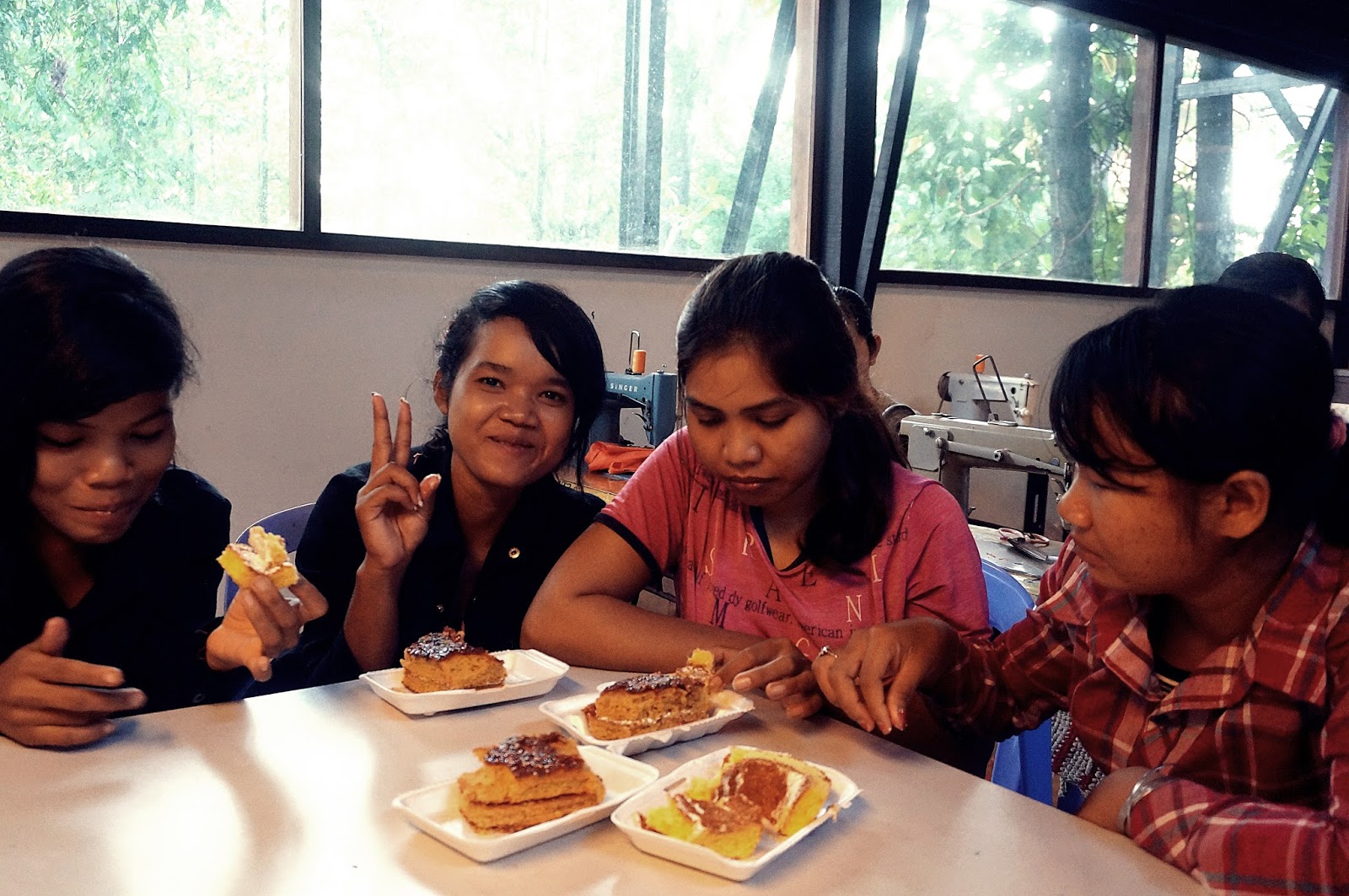
うちの団体では裁縫技術学校も経営していて、ここでは40~50人ほどの女の子達 が10ヶ月間、仕立て屋になるための裁縫技術を無償で学ぶことができます☆ 

今は1日2時間、ここで女の子達に英語を教えています。英語のレベルは全員バラバラなのでそれぞれのレベルに合わせて、あたしも片言のクメール語(カンボジア語)で毎日一意奮闘して教えています  汗。


カンボジアはアパレル生産が盛んで世界中のブランドの工場があるのでビジネスの上で英語は必須。ここに通ってる女の子達は貧困の村出身者が多く、少しでも多くのことを学校で学んで将来に役立て欲しいのが団体としての願い。そのためにも裁縫技術だけではなくて英語、ビジネス経営学や家庭科、道徳、保健体育などの知識も身に着けてもらいたいので現在みんなでカリキュラムを練り直し中!


教師としての経験がもともとゼロなので当初はかなり不安でしたが、 カンボジアはみんな勤勉、勉強熱心な上に覚える意欲がとても強いので教師のあたしとしてはとても教えやすいです。(*^^*)かなり金八先生顔負けの熱血教師になってます 笑


学校の出資者はあのパークハイアットホテルです♪ 真ん中の男の子は裁縫学校の教師の息子さん


英語教師は私ともう一人の教師と2人3脚でやってたのですが帰国することになってしまったのでこの2週間はあたし一人で奮闘してます 涙


Wednesday, November 6, 2013

Surviving with a Daily $5 food budget

Now that I'm unemployed and in Cambodia, my daily budget is $25 per day (big difference from my $130+ daily expenses in Tokyo!). This includes all my expenses minus my plane tickets: lodging, transportation, food, cell phone, utilities, language classes, laundry, outings, health insurance, and visa fees. Hence my daily food budget needs to equate to under $5.

But is it possible to survive with such a budget in Cambodia?

Let's lay out the basics here:

Be forewarned that if you have food restrictions, eat in "American" portions (I got used to eating Japanese portions so quite small) or prefer eating Western food, your food bill will be slightly higher than mine. Also of course, eating at restaurants will bring up the budget as well. As for me I prefer to eat mostly at local food stands or cook in my room.

And fortunately I am not picky about food. The only thing I cannot live without is rice but luckily it so happens to be Cambodia's staple meal (whew!). As with all mothers, my mom was very worried about me adjusting to local food here but I actually love it. Frankly I think Cambodian food has been under appreciated, hidden in the shadows of neighboring Thai and Vietnamese food. While I adore both cuisines, I find Thai food too spicy and Vietnamese food too herb-y to eat daily. Cambodian food is a moderate version of the two so I don't mind eating it everyday at all. In fact, I've never really had food cravings for Western or Japanese food yet so it's been keeipng me happy.


Breakfast
Since I stated running regularly in the mornings, I eat mostly eat in my room for a healthy carb rich breakfast.

30g of muesli  $0.40  2 small bananas $0.15 milk $0.27  1/2 dragonfruit  $0.20 coffee $0.02  = $1.04

Btw, I bought ground local Cambodian coffee at the Old market and I filter it every morning with an Asian style coffee filter. There's a slightly nutty chocolate aroma to it and I absolutely love it. Many people perfer Vietnamese style coffee but it's a bit over roasted and the bitterness is too strong for me. I strongly recommend it if you like mild yet strongly caffeinated coffee.

Sometimes eat out at the stands sitting on the side of the streets. Cambodians start their days early to avoid the scorching heat. By 6 am, the streets are bustling for rush hour. I love watching kids bike to school in their crisp white and navy uniforms and office ladies riding off in their scooters with their tin lunch boxes tucked to their side. 
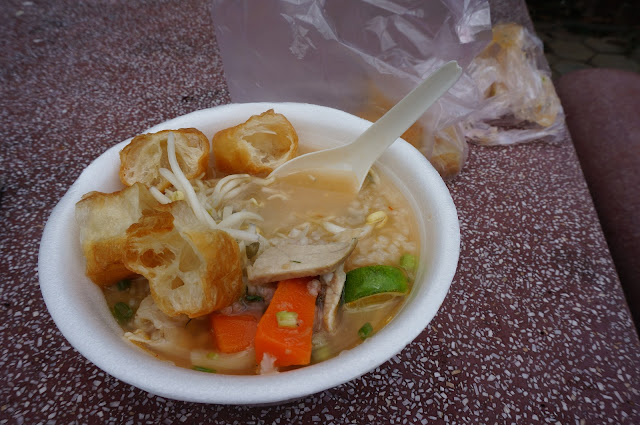
Cambodian style jok with fried donut $1.25 (5,000 riel)

Lunch time
Since I'm always running around doing errands, I usually grab noodles or Cambodian sandwich (nohmpang pate)  ($0.5)
Cambodian style baguette with marinated vegetables, hot sauce, fish sauce, sliced pork, and ham 2,000 riel ($0.50)


Short rice noodles fried with egg on top 4,000 riel ($1)

Cold rice noodles with sliced boiled pork and fried spring rolls & fresh spring rolls 6,000 riel ($1.50) 
  

Snack
It's so hot during the day, I usually crave for something cold and sweet. The ice coffees here are great because it has strong Cambodian concentrate coffee with condensed milk and ice. It instantly wakes you up and the taste is absolutely addictive ($0.50). Or if I feel I can stuff a little bit more after my meal, I'll have one of the coconut milk desserts ($0.16~0.25/plastic pouch or bowl). My favorite so far is the one with banana and taro. I'll put up a post solely on desserts in a future post!


Dinner
I grew up in a lower working immigrant class family in the US so my family seldomly dined out. Plus we always perferred mom's homemade Japanese dishes over heavily greased steaks and oil drenched french fries. I still never really go out to eat, even in Tokyo when I worked 12 hours and came home around 8 every night. Cooking is my way of relaxing after a long day of work. Here, I usually do my groceries few times a week at the Old Market.

The ladies at the market know me and they always manage to snuggle a few extra pieces of chili or green onions for me! A kilo of assorted vegetables is about $1.

 I usually end up making pickles with them - kindly be reminded my ancestors are from Tohoku part of Japan who are great pickle lovers. Needless to say, I always need to have my share of pickles no matter where I am in the world.

Pickled cucumbers and baby carrots
 I don't have a kitchen but I do have a mini fridge and an electric kettle. I also brought a dinner knife, a plastic plate, tupperware, and utensils from the States, plus I bought a few other kitchenware at the Old Market. This turns my desk area into a makeshift kitchen. Along with my vegetables, I also buy rice and dried fish on the street and it's amazing what you can whip up.

Green beans $0.1, Cambodian Chinese sausage $0.25, rice $0.25, homemade pickles $0.2, mango $0.40 = $1.20


Rice $0.25, green bean salad $0.25, dried fish $0.5, baby carrots $0.15, fruits $0.20 = $1.35

Rice $0.25, vegetables $0.30, kidney beans $0.6, tapioca dessert $0.16 = $1.31

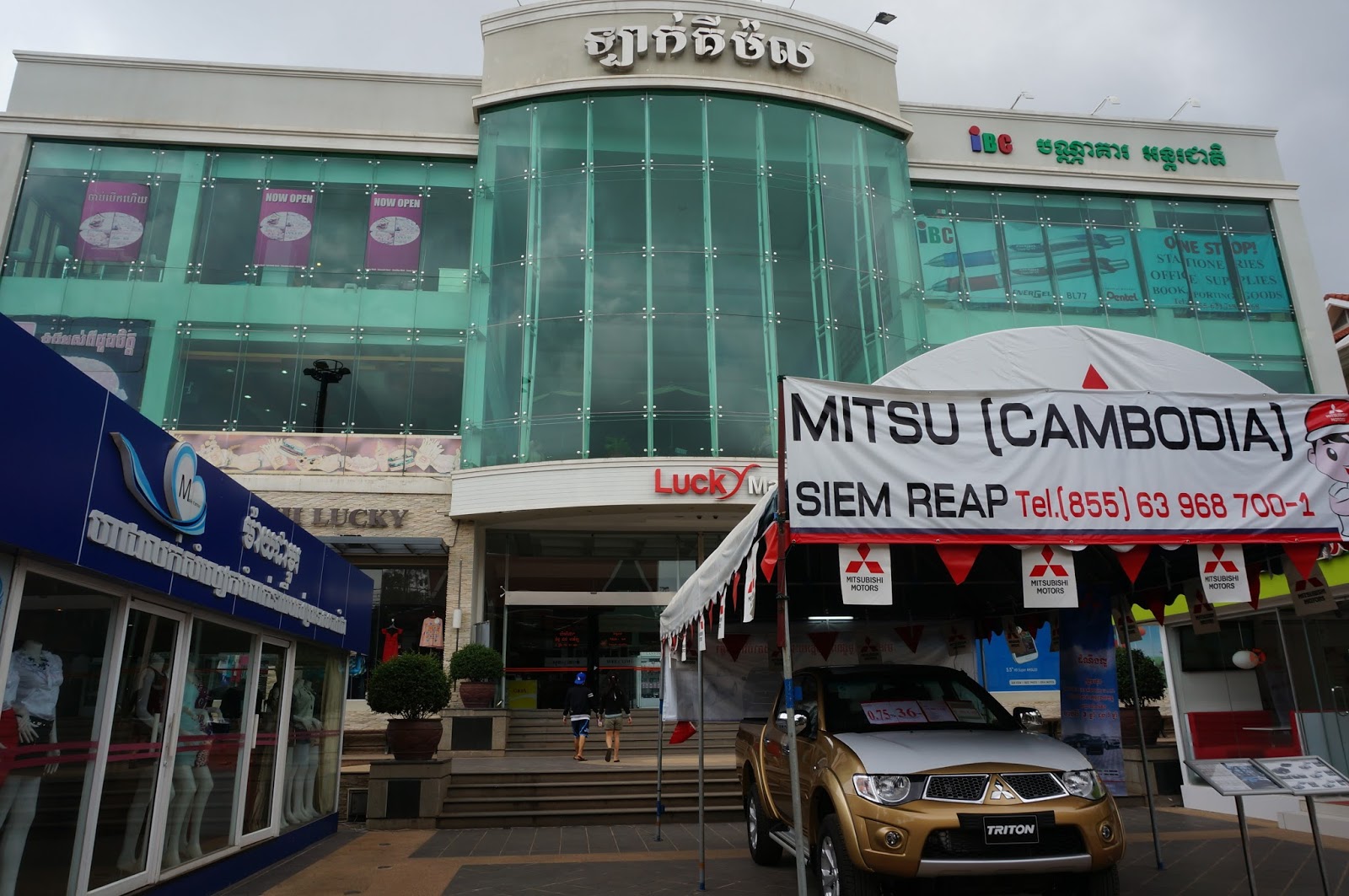
You'll notice that some of the foods that I make don't entirely come from the market. I buy my "Western" food products at supermarkets which are largely for the expats. There are two big ones in Siem Reap: Lucky Mart and Angkor Market.
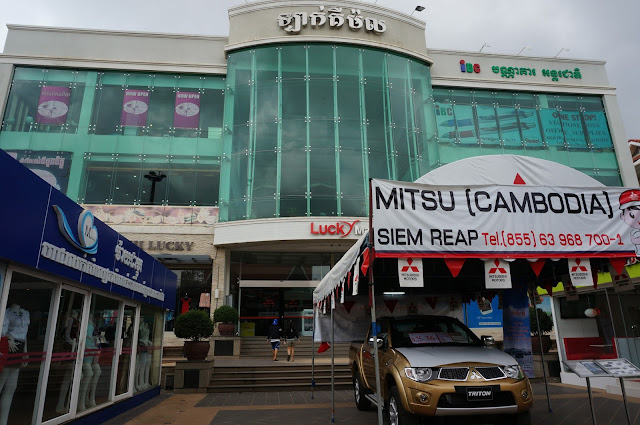
Lucky Mart


Angkor Market

They have quite a selection, everything from wine, cheese, oreos, to Japanese condiments.


All in all, my daily food cost is about $3-4. Throw in an extra dollar for those occasional splurges (a few of those nice cold draft Angkor beers each for $0.50 for happy hour? I'm in!) and I'm right under budget. 

The other day, a monk I were chatting about food in Cambodia. He asked me if the food was good here and apologized that it was not to the quality of developed nations. I told him it was the total opposite. I'm eating cheaply and healthy unlike the terrible eating habits in US with ample fast-food and junk food ubiquitously available. Those simply do not exist here and even for the few that are, it's a luxury. And that's good. The Cambodian version of fast food here is a lady carrying and selling baskets of freshly cut pineapples and mangoes or a $0.50 Cambodian sandwich sold on a roadside food stand. And I love it. Nothing can beat cheap good healthy food. 

I went astray a bit but in conclusion, yes I can survive on $5/day with no problem. But do put in mind that I am dining like a king in local standards. An average Cambodian worker in Siem Reap makes about $5,000 annually at best. Compare this with where I came from. I had to pay $28 for a cheap decent size watermelon. Eating out for lunch in posh Roppongi area cost me $17 on average. And get this: a fake chipotle's burrito for $11.50. That's Tokyo for you. While the prices were worth what I paid for the amazing food quality in Tokyo, I'm glad I'm out of that world!

Sunday, November 3, 2013

"Good Deeds"


After talking about the experience from my previous post to people, a few have told me "Great job. Now don't you feel good that you did a such a good and generous deed for these poor people?"
 
I am happy and glad that the children now have new stationary for the new term. But it is a tremendous overstatement to say that I did a life changing deed for these children. Me nor my other fellow volunteers and monks think there is anything we should be particularly proud or be boasting about.  
 
This is not say I am denying the work that we've done; I am very glad that I did it. But it's nothing more different than all the other things I do daily at LHA. It's part of my job. And most importantly it's part of my duty as an ordinary human in civil society--when in need, people help each other out.
 
Yet others do not see it that way. What bothers me most about DCVs (developed country volunteers) coming to Cambodia is that they have an extremely conciliatory and lording attitude when doing these sort of "charitable" work. They bring boxes of food, clothing, and books from their home countries to distribute in Cambodia. They claim themselves (ostensibly) as doing humanitarian deeds and hail themselves as "saviors" in a brazen manner that is jarringly disturbing. They even update their Facebooks as such. Even worse they post pictures along with it --heads hung high with their smug smiles and hugging children they barely even know.

 Do not get me wrong, it certainly is praise worthy that these people fly thousands of miles to these distribute goods. But the reality is that it does not significantly impact the local people at all. They are merely putting temporary band aids on wounds that will certainly open up again. It will not change the fact that they are still socioeconomically disadvantaged and living in vulnerable conditions. 

The true definition of good deeds and humanitarian relief is bringing about change. Rather than giving out things for free, we really need to be advising the community on how to become sustainable. We need to teach them how to create businesses and help them with community planning. Needless to say this is excruciatingly hard work that requires diligence, perseverance, and leadership. But it will make an everlasting impact and a big difference in peoples lives. Only then can you say that you have done a "good deed".  

Yet the attitudes of some volunteers has made me irate and it's been ruminating in my head. It's been a been a real struggle for me to sort out my emotions though once it is, I would like to write about more in further detail. But one thing I am sure is that the ignorant actions of some will not deflect me nor ebb my passion for what I am here in Cambodia for: true compassion and striving for a better and sustainable society. 
 
In any case, thank goodness I work with an amazing group of volunteers and monks. The day had been amazing with a lot of laughter and smiles all around. And though very briefly, it's always nice to mingle with communities outside of Siem Reap. There is still yet so much to see and learn about in this beautiful country.


Mini "business trip"

For monks, weekends to not exist. Every day is a life of dedication, compassion and helping those in need. Last week neighboring temple Wat Bo has invited our monks in a joint effort to distribute school supplies to a village school outside of Siem Reap. Us volunteers were invited to tag along.
 
It's always an adventure going on organized mini mission trips outside Siem Reap. First of all, you need to understand that that this is the Cambodian version of a "bus":
 
 
Yep. 

The Western buses are only for tour buses and long distance intercity buses (e.g. Phnom Penh - Siem Reap). Though luckily, we all couldn't fit so all the foreign volunteers managed to get a van (with AC!) instead.
 
Let me also remind you that these trips are often organized by monks, who usually don't have the best set of organizational-oriented minds! We met up at 6:30am and it wasn't until 8:45am that we were finally on our way to the provinces to deliver stationary to the local village school. But despite the wait and enduring the bumpy roads to get there, the bucolic scenery of the countryside were  absolutely beautiful.


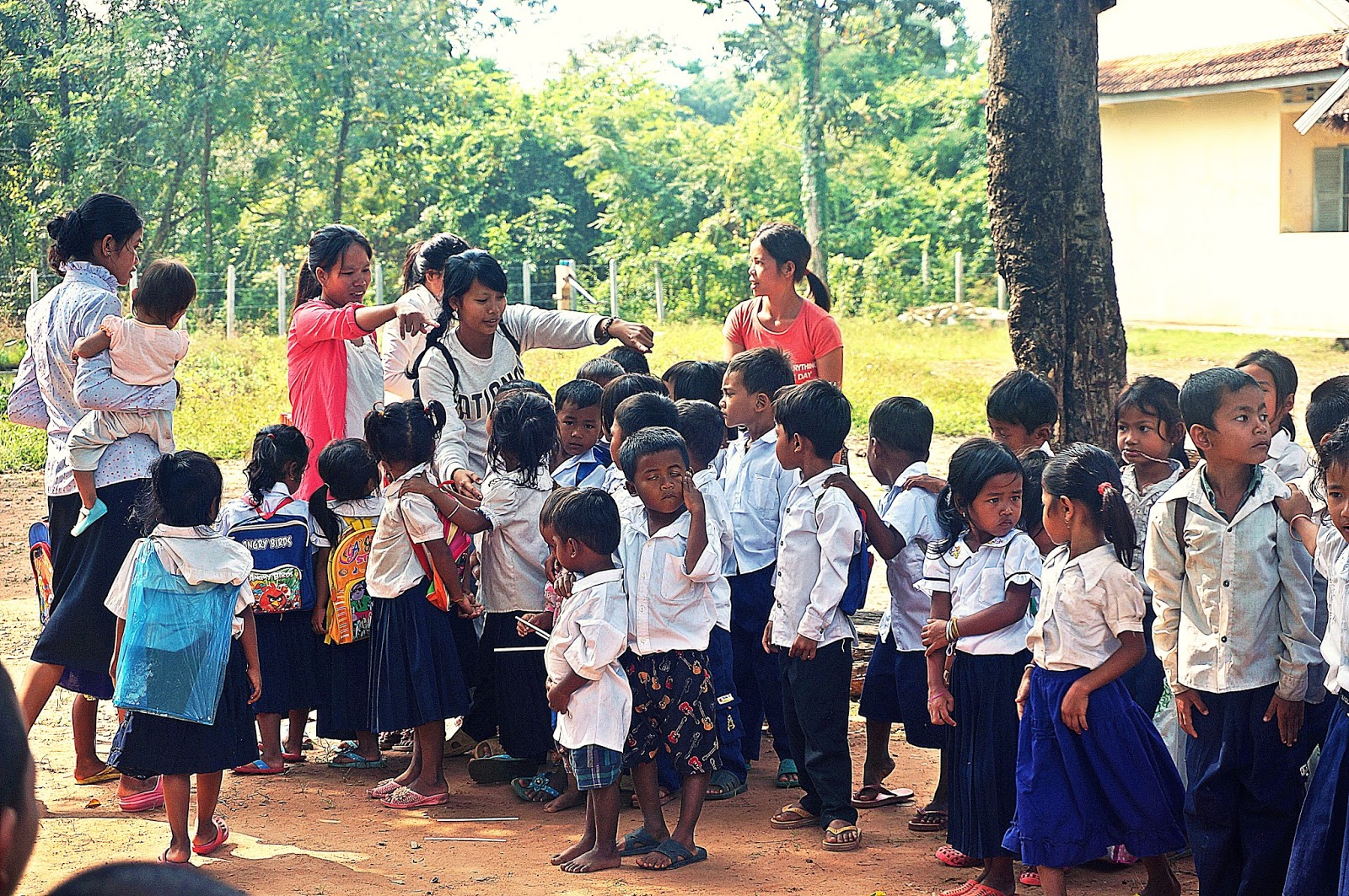
After a trundling hour ride, we arrived in the village school in which all 400 children were standing in the heat, waiting for our arrival despite being a Saturday.
 
Royal treatment greetings


The thing with Asian countries is that we like to make things real formal when it comes to donation distributions. The monks had a comlete agenda of speeches ready as the kids awaited in agony... but nevertheless I can see their excitement in their eyes.  


21st Century Tech savvy monks


The older students giving their thanks on behalf of the students


Organizting the stationary to pass out!


Hold up your new notebooks and pens!


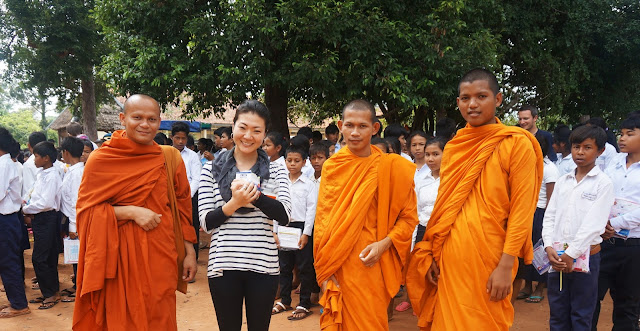
Taking a break and taking a shot with the monks


The monks here sure like to take their pictures, they caught me in this one!
 

Successful trip. Distributed all the goods to 390 children


And of course, the best part for us is (free) lunch!


Gotta wait till all the monks finish eating, even the little ones!


And finally...chow time!


Friday, November 1, 2013

Ladies Night

One of the best things about Cambodia is that alcohol is cheap. And I mean dirt cheap. A draft Angkor beer is $0.50 and even in expensive bars a cocktail is under $5. As tourists flock to bars after a long hot day of touring Angkor Wat, it's a lucrative business. 
 
To keep up with the competition, many bars have various events and Happy Hours. In midweek many of the bars have Ladies Night in which we took advantage of at the Sonia Moria Hotel. Alcohol half off until 7pm plus a glass of free sparkling champagne. Can't say no to that!
 
The bar is on the rooftop of the hotel with a jacuzzi on the other side. Plus the staff there are sweet and attentative. Highly recommended for some serious girl talk over a few drinks. It's still low season so it's a shame that there weren't many customers there.