Saturday, February 22, 2014

What it Means to Eat


It’s been almost a month since I’ve arrived in Southeast Asia and I’ve lost a significant amount of weight. This heavily attributes to sickness, food poisoning, and the lifestyle changes the past month.

But aside from that, I notice particular preferences in food whenever I’m in Cambodia. For one thing, I stop craving for ice cream, cookies, cakes, and chocolates. I don’t have a big sweet tooth but whenever I am in the US, I occasionally crave them. I suppose this has to do with being at home during the holidays in which sweets are in abundance. I also don’t crave alcohol, Western food, and fast food even though they do have them in abundance here.

I think there are many reasons why my cravings changed drastically. One is that I am simply happier here and don’t have to resort to eating and alcohol to satiate any dissatisfactions I have in life. Another is working with monks and seeing their strict eating habits have inspired me to be mindful and not eat in glutton, especially in front of them since they are forbidden to eat in the afternoons. To the same extent, I eat mindfully in reminder that a significant amount of people in this country are not able eat adequately on a daily basis. It just seems wrong that I am living in that sort of environment and eating lavishly. I know that by me eating less will not be a benefit anyone nor would it feed more people. But I simply am not motivated to eat in excess. 

A recent World Bank study showed that poverty rates have gone down in Cambodia but only a marginal level. One out of three children is malnourished. I notice that many children are way too small for their age. To make things worse, national health and nutrition standards are essentially nonexistent.

Living in the US or Japan, I had never thought of hunger. I was always rather full from the abundance of food, including junk food, fast food, and desserts. No matter how low on cash I was at the end of the month, I never had to seriously worry about where my next meal will come from. I dined at lavish restaurants for client dinners and every Friday night was a bacchanalia. Living in Japan, I was picky with food quality and service it offered (Japanese people regard food very highly so having good quality food is part of life and culture). Of course I am not going to feel guilty about my past life style.  Rather in hindsight, it makes me realize how grateful I have been for being able live a life of never having had to worry about food. 


One out of eight in this world is not able to eat adequately, many of them children. It reminded me of Stanley Ka Dabba, an Indian film I saw the other day. It’s about an Indian school boy in Mumbai who is not able to bring lunch to school which you will see why towards the end of the movie. Contrary to the rather dark context of the movie, it’s actually a comedy, and also highlights the diverse food culture of India. This is not your typical Bollywood movie so it will not have any dancing or dramatic climax of events with a tragic ending. But it's a cute story, I highly recommend it. At the same time it will make you rethink about the many children in the world that face hunger everyday.


Rewind: Finding Obon in Cambodia (Nov 2013)


Since I’ve talked about Meak Bochea, I would like to share another Buddhist holiday –only this one is a Japanese holiday.

Obon is traditionally held around beginning to mid-August and it’s a week when dead souls come back to roam around Earth. Families put out ornaments/incense and perform rituals to welcome their deceased ancestor back in. Many go back to their hometowns to gather with family and visit cemeteries to pay respect to their ancestors. It sounds like a somber holiday but it’s actually quite festival with summer festivals, firework events, and obon dancing.

If you live in California, your friends might’ve invited you to Obon festivals at local Buddhist temples or Japanese community centers. Or if you’ve celebrated of Hungry Ghost Festival in China/HK/Taiwan it traces back to the same origin.

The story behind this holiday goes back to when one of Buddha’s disciples, Moggallāna (or Mokuren) discovers that his deceased mother was suffering in the realm of hungry ghosts. In order to save her, the Buddha instructed to make offerings of food and pray for her. In the end her mother does get released and Moggallāna dances in joy. This dance of gratefulness has been adapted as the bon dance. (note: My memories of this story go way back to dharma school at temple when I was young so please forgive me if I’ve let out anything) 

In any case, people in Japan and global Japanese communities circle around a yagura in traditional obon dancing. Many dress up in traditional summer kimonos and lantern are lit up around the yagura which makes the festival especially colorful. Taiko and fue music resonate all night. 

As many of you know, I lost about a dozen friends and family in the 2011 Tohoku Earthquake. It was life shattering in many ways as not only have I lost people who were close to me but also a community and a place I called my childhood home. It was especially hard losing my uncle, who was a father figure to my mother and so naturally he was grandfather figure to me in my childhood. In my later teens, there was a lot of family strife and I lost contact with him. He became a sort of a curmudgeon and developed alcoholism. It was said that few months before his death on March 11, he was diagnosed with fatal lung cancer. I often think about how things may have changed if I was still kept in contact with my uncle. We were inseparable whenever I visited him in the summer. He would usually pick me up after breakfast at my aunt’s house and take me on a drive along the beautiful Sanriku coastline. We would stop at his favorite ramen place and afterwards he will pull over to get cigarettes and buy me ice cream. On weekends I would stroll over to his house and lie with him on the tatami for an afternoon nap. Not only can I ever relive those days but all the memorable places have been washed away.

It’s been three years since his death (in accordance to the Chinese counting system which counts year 0 as 1) which is a pivotal landmark in Buddhist traditions as his soul has finally reached his intended destination.

So what does ALL this have to do with my time in Cambodia? 

I missed Obon in Japan because I was the midst of a chaotic moving process back to the US. So when I learned that the Japanese society here was having their Obon Festival in correspondence with the Pchum Ben Festival (the Cambodian version of Obon), I had a need to go.


The event was beautiful, the venue beautifully decorated with lanterns and a makeshift yagura. The stage featured dancing, taiko performances, and comedians. The event ended with dancing to the Tanko Bushi, a Japanese Bon Odori favorite and one that I’ve danced to since my youth.


Unfortunately I didn’t participate in the dancing but my attendance at the event was my way of sending off my uncle to where he belongs. I do hope he is in a better happier place now.

Thursday, February 20, 2014

Meak Bochea Day (មាឃបូជា)


While the Western world was hung up on buying roses, reserving a place for a romantic dinner, and writing cards, Southeast Asia was busy repenting for their sins!


It was Meak Bochea or Magha Puja day in which is a significant holiday for Thai, Lao, Cambodian, and Burmese Buddhists. I am a Mayahayana Buddhist so I am not too familiar with the holiday so please correct me if I am wrong on any of my explanations. But to summarize the importance of this holiday, a few significant things happened on this day: 1) It is the day in which the thousands of his disciples all voluntarily came to see him despite it wasn’t summoned or organized by anyone. 2) Upon seeing his disciples, the Buddha gave a sermon which talked about freeing oneself from evil and purifying the mind. 3) He also announced that he will be leaving this world in three more months. 

As so many things happened that day it’s considered an auspicious holiday. Many refrain from committing any sin (including smoking,drinking, etc) and perform merit making activities.

We were cordially invited to the service at Wat Damnak which starts out with chanting followed by taking the offerings around the temple ground three times then in to the main service hall. There, more chanting is done followed by a dharma talk. The night ends with lighting of candles everywhere in the temple and monks and followers come and go all night giving their prayers and offering to purify their sins.

Cambodian culture and tradition is deeply rooted around the temple so it’s always grateful that the community is always welcoming us in their activities, especially special ones such as these. 


Procession of monks and nuns


Lay followers follow the procession, carrying flower offerings

Orange and white


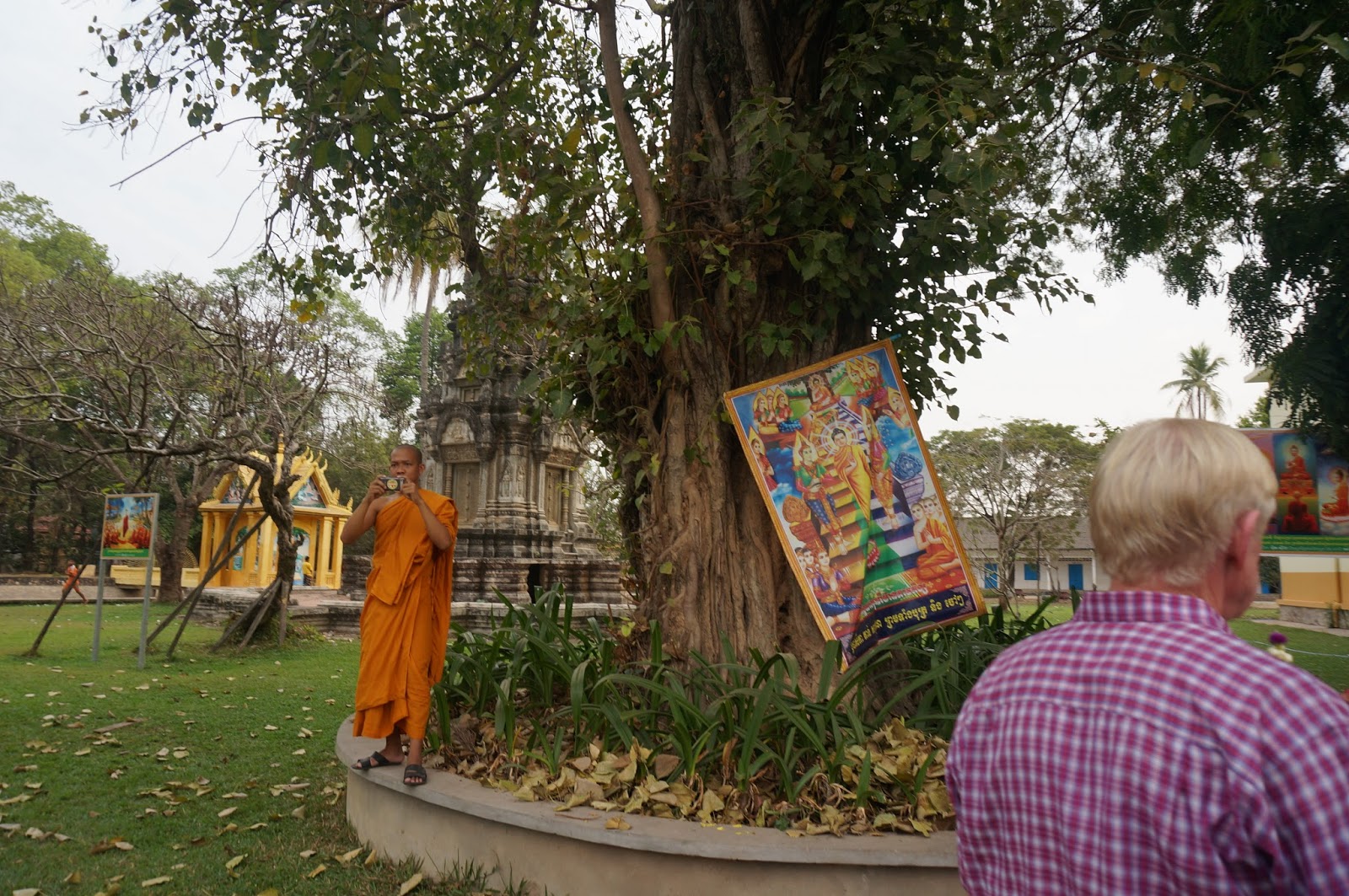
Paparazzi monk!


91 year old abbot gives his prayers before the chanting session

Monk buddies

Pagoda doors are open for a special blessing session

People being blessed with what is say to be the Buddha's Relics (bones)


Adorable nuns

Lighting candles


B級ぐるめ その2

最近なぜか食当たり(?)食中毒(?)を起こしてしまいお腹が落ち着かない...汗

病気になった時といえばお粥が定番ですが、味気ない日本のお粥は昔から苦手 (ー ー;) アメリカ人なのでどちらかといえばチキンスープ派。

そのせいか、普段は肉はあまり食べないのだけど、調子が良くない時は自然と体がチキン系を欲するようです。


カンボジアの定番朝ごはん、バーイ・サエッモアン(チキンライス)。いつも市場で食べてるのですが、ここのは付け合わせの漬物がおいしいんです♪ そして必ず尽く鶏ガラスープがまた一番おいしい♡ 野菜と鶏のダシがしっかりとれてます。

150円なり。

さてこれでお腹も治まってくれるといいのですが...

Wednesday, February 19, 2014

Health and Cambodia

(日本語↓)
Some work updates. As in my previous entries, I’ve been trying to incorporate some life skill lessons in some of the programs that our organization offers to girls. Some possible topics in the course include health issues, job counseling, and management skills. A big issue is health since many girls in Cambodia do not get adequate education revolving this topic.

I had the opportunity to shadow Carol, one of the directors, to our organization-run orphanage. Carol, who is also a certified nurse, visited the site to educate the staff on HIV/AIDS as there are a few children at the orphanage who are infected. The good news is that all the positive children are receiving regular medical treatment. Nevertheless, we held an information session as there have been many misconceptions and worries from the staff surrounding the disease.

There were many interesting issues that were raised during the lecture/discussion session but the most eye opening topic of all was when one staff member raised the incident of “health government officials” arriving at the orphanage a few weeks ago. They mentioned that they were informed of HIV positive children living in the orphanage and that they must be taken to an HIV specific institution. Moreover, they insinuated the orphanage of being a threat to the other children who are not infected. 


This situation is alarming and dangerous on many levels. First, why did these “health officials” know about this fact? And second of all, why would they demand to take these children away?

 Our orphanage is run under our organization, legally and successfully for many years. Unlike many of the orphanages in Cambodia,  the children here in fact really do not have parents and many come from troubled backgrounds. But most importantly, our orphanage is NOT run under a volunteer orphanage business– in fact volunteers are generally not allowed on the grounds unless they are major donors or come for specifics needs (mostly professionals to train staff on particular issues). Our entire staff is fully qualified and all the children are getting their expectations met. The HIV positive children are fairly and equally taken care of as the other children and their medical needs are met.

I was livid as it not only degrades the infected children but also our staff and organization who have been working so hard to make the orphanage sustainable. Nevertheless, why the fuss? There is only one simple answer: it's a threat. In other words, they want a bribe (standard is $10/child). As preposterous as this sounds, corruption is ineluctable and a reality in everyday life in this country. 

Another concern is that the privacy rights are not respected. Each HIV/AIDS positive individual has a right to make their status private. Disclosing this would be a breach of international law. Nevertheless, these rights are outright ignored. It's pedestrian for an Asian country where tight knit community and family is prioritized, and privacy is a hard concept to grasp. It will definitely take time for people to understand but it is critical issue for sensitive issues such as this. More importantly, these insular and libertine "high ranking" government officials need to end their unscrupulous actions and mishandling dire issues that the country faces.

It gave me some insight on the topics and issues to be raised at my own workshops I will be designing with the girls and this is going to be a difficult one for sure


Thanks to the many donors, our kids lived in a self-sustained gated community

Project coordinator (and paparazzi/redbull coke lover) Ven. Loeurm

Roundtable session with the kids


Little kids and big kids live together in several group homes

Water filter system given by donors. There is no electricity in this area so everything is solar paneled at the orphanage, also donated. 


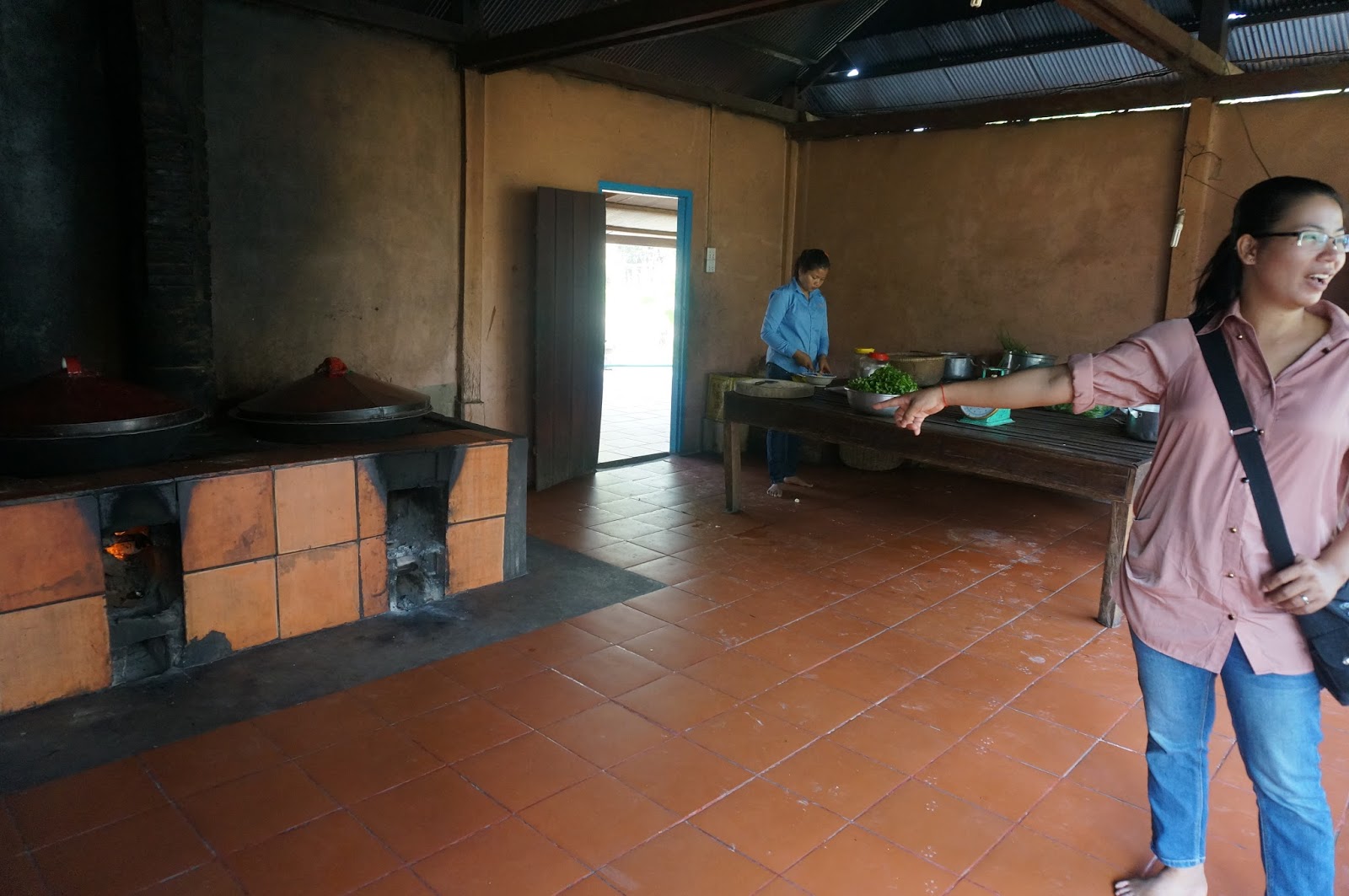
Old school kitchen! Like my grandma's place in Japan before we renovated it.

Most of the vegetables and fruits eaten at the orphanage are all home grown

Lunch time!


Lunch time for the staff...man these kids get fed so well.

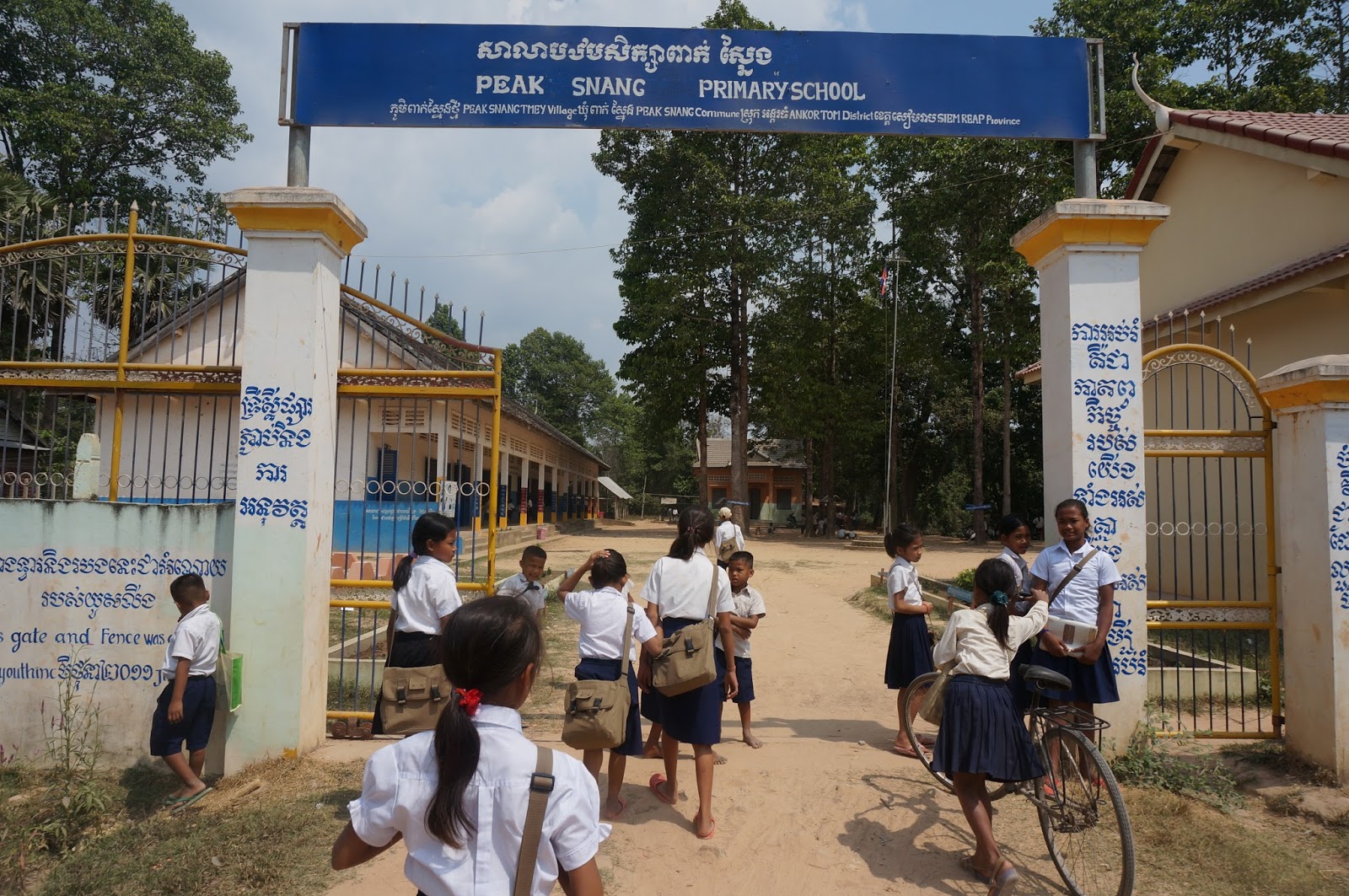
School bus, Cambodian style. No joke.


カメラを向けたら恥ずかしがりやのカンボジアの子供にしては珍しくしっかりと顔を合わせてくれました。強い目をしています。一番お気に入りの一枚

Off to afternoon session class


Lecture/discussion with the staff


Wonderful and hardworking staff. Thank you for having us!

先週働いているNGOが経営している孤児院を訪問してきました。
ここ数年カンボジアでは観光客を孤児院でボランティアさせてお金を取るという「ニセ孤児院」が問題となっている中、ここはちゃんと認可されている上、カンボジアでは珍しく経営もちゃんと成り立っている模範的な孤児院。スタッフはもちろん全員トレーニングを受けたカンボジア人。約40人の子供たちがグループホーム式で共同生活をしています。

今回の訪問目的は当NGOのディレクターであるキャロルの補佐。入所児童の数名がHIV患者のため、スタッフへのHIV/AIDS指導・および生活指導の講義を行うのでその手伝い及び視察に付き添わせていただきました★

と いうのもあたしは裁縫学校の生徒たちのカリキュラムの一環として健康・生活指導の授業を設けようというプロジェクトを進めているので、今カンボジア社会がどう HIV/HIVが受け止められているのか生の声を聞くためにも日々HIV感染者の子供たちと向き合ってるスタッフの意見が聞けるいい機会となりました。

ここ10数年でカンボジアでのHIV感染率は減少しているものの、まだまだ誤解も多くて正確な情報がカンボジア社会で浸透していないのがが現状。特に政府内での誤解がその引き金となっているのも事実。

ス タッフとの話し合いで一番びっくりしたのが数週間前に「政府機関の役人」と名乗る人が数名孤児院を訪れてHIV感染の子供を別施設に移すよう要請しに来たこと。理由を聞くと、他の子供たちへの感染の恐れがあるからとのこと。うーん・・・うちのスタッフはHIV/AIDSの知識はちゃんとある上、そもそもHIV感染者と非感染者との共同生活の中での感染率は極めて低いんですけどっっ!その上感染している児童は全員治療を受けているので他の児童への感染率の更に低くなるはず。その知識もなくて恥ずかしげもなく「政府の人間」と名乗る事自体おかしい。

そして一番気がかりなのがどうやって役人クラスの人が孤児院にHIV感染の子供がいるという事実を突き止めたのか。基本的にはHIV・AIDS患者は個人のプライバシーが尊重されるため、誰が感染しているかしていないか病院や医療施設以外で公表されることはない。

つまりは誰かがタレこみをして、それに対して政府側が孤児院を脅しているということ。

日本や途上国では考えられないけど、脅しや賄賂はここでは日常茶飯事。政府側も多分お金を渡すまで引き下がらないので今後どうなることやら・・

ま、 その問題はさておき、それ以外では楽しい訪問となりました。スタッフや子供たちを放したり、敷地内を案内してもらったり、とつくづくウチのNGOのお坊さ んたちはすごいなーと関心しっぱなしでした。カンボジアの子供たちは本当に無邪気でかわいいんですよ~♡ 癒されました (*^_^*)。入所している子供たちの多くは情緒不安定なのでそれも考慮した上で一般ボランティアは受け付けてないのですが、また機会があればまたぜひ訪問したいです。