Saturday, April 12, 2014

Last day of Teaching

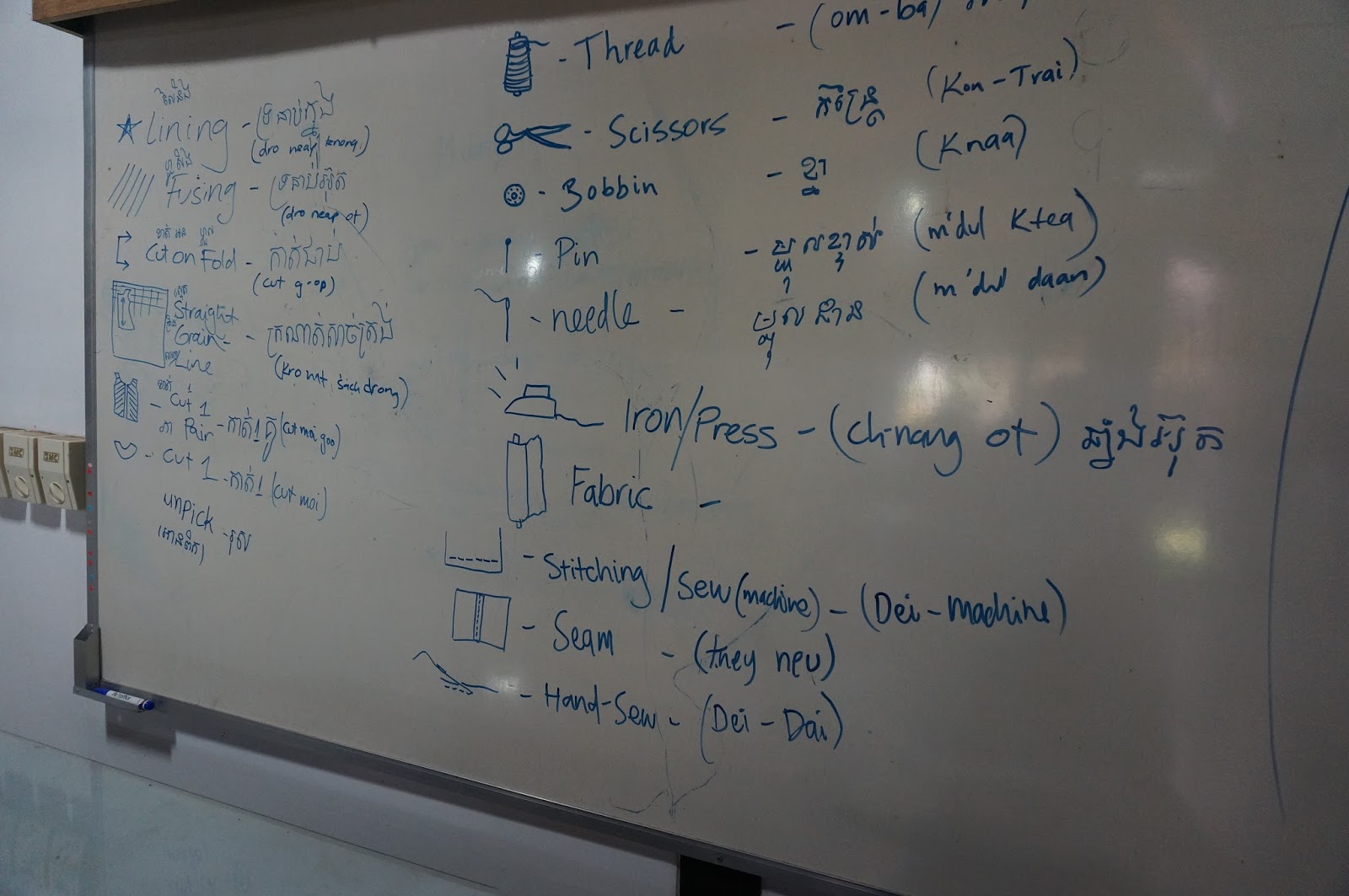
I still have a few days until I leave Cambodia for good but with the new years celebration coming up, it was my last day to teach the sewing school girls.

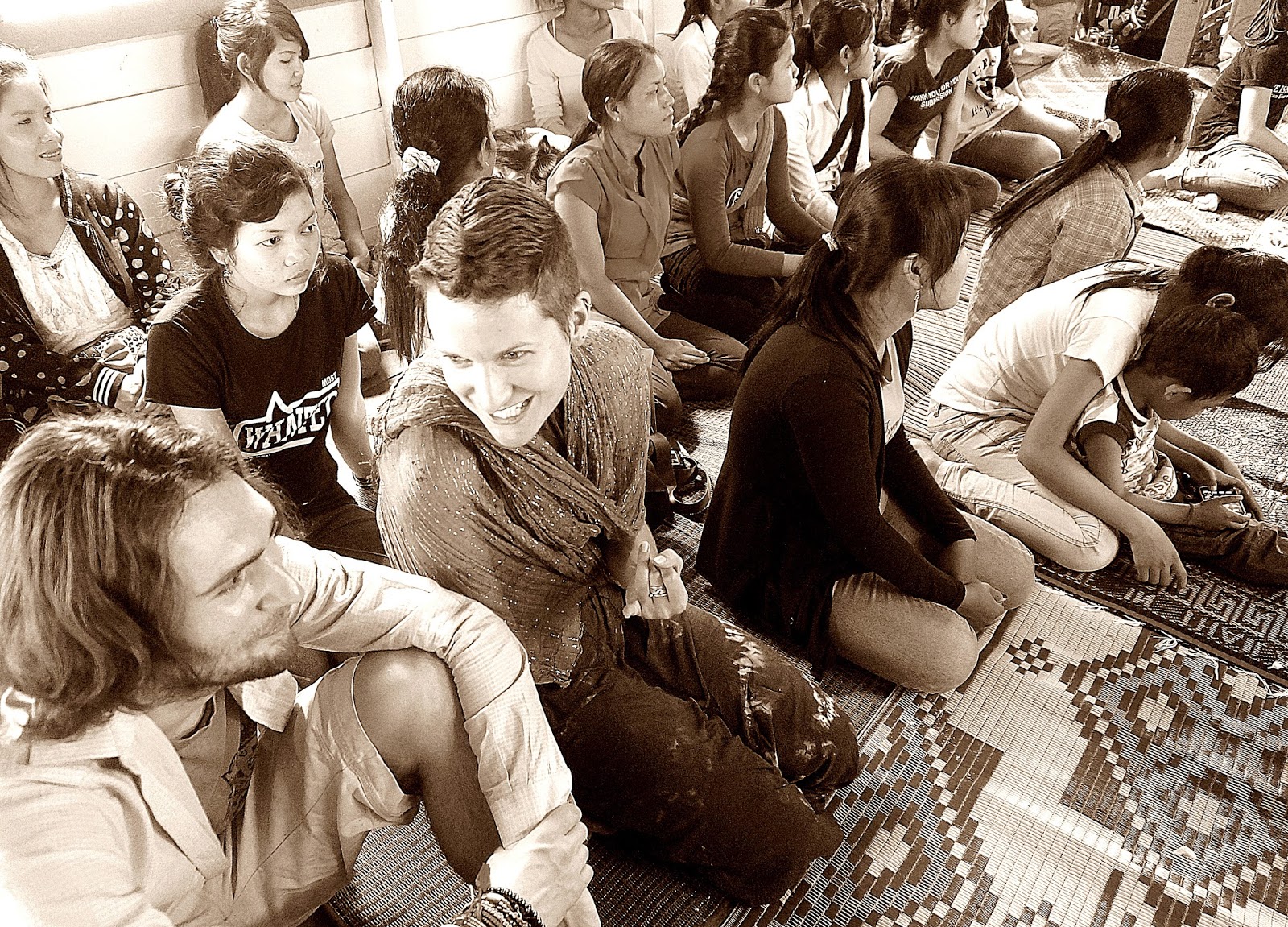
They have such a curiosity and eagerness to learn which kept me to come back each day to teach them. And yet they were all so friendly and we also were able to joke around a lot in a mix of Khmer and English which made class time much more enjoyable. My main focus was English but hopefully I was able to teach them some life skills as well. There were so many things I wanted to incorporate into their curriculum including workshops but as always, there wasn't enough time.

I sincerely wish that they will become wonderful women, wives, mothers, and entrepreneurs and they will carry the future of Cambodia with them. They have such a bright future ahead of them and I'm so proud of how much they've all come.


I cannot wait to see them again when I visit in the near future!!!

Is MSG an evil condiment in our modern kitchen?


Before you shout out “yes yes yes yes!” I’d like to provide you some prospective.


This thought first came to me as MSG is commonly used in household throughout Southeast Asia, including Cambodia. In recent years, MSG has been gaining popularity in the Middle East and Africa as well.  Despite the many criticisms and controversy surrounding MSG what makes this condiment so popular worldwide, especially among Developing countries? 

To see the other side of MSG, I think we need to go back a bit in history.  MSG, or commonly known in Southeast Asia as Ajinomoto (it’s the name of the company, same as how tissues are referred to as Kleenex)  was first created in the early Twentieth Century and was intended to recreate the traditional Japanese taste of umami. Umami literally means savory flavor and it could refer to a number of different tastes (and also where the chain Umami Burger gets its name). Essentially, it's that faint good aftertaste that remains after the food has dissolved in your mouth. Think of it like the "secret ingredient" grandma put into the spaghetti sauce that makes a world of a difference. So in short, it's makes food much more rich and complex.

The condiment revolutionized Japanese kitchens postwar. Food was scarce back in the day and the little amount of food that sold was poor in taste. Hence MSG instantly added flavor to bland tasting food. It especially revolutionized miso soup. In post war, miso and dried fish broth, both main ingredients in making soup were very scarce and expensive. By adding small amounts of MSG, it boosted the flavor and also gave it that faint smell of grilled fish which gave the aroma equivalent of the fish broth. Hence MSG was an inexpensive condiment that helped enhanced the taste in many foods. 

MSG is used to the same effect in Developing countries today: as taste boosters. Take Cambodia for example. Although Cambodia has an abundance of food, and a rich cuisine culture, the quality of food is still primitive. I especially noticed that the quality of meat in Cambodia is of very low standards. Many of the animals are very lean so the meat is very bony. The meat is flavorless and the texture is coarse. Hence MSG is used as an aroma and taste booster.


What will mango be without MSG chili salt??

Trust me, this stuff is delicious
MSG also helps family save on food money. I read an article about the spread of MSG in Egypt. One of the families interviewed said that they were grateful of MSG because it is a cheap alternative to buying expensive meat to use as broth. Instead they can allocate that money to buy more nutritious vegetables and make more portions of food for their large families. I think this was the key point of MSG in developing countries.

Critics argue that utilizing MSG will be a health hazard in the long run. But is it really? Sure, consuming them in copious amount is certainly not good but that goes the same for all foods such as salt, sugar, and oil. My grandmothers must’ve eaten MSG every day for half a century and they both died at age 91. Both were very healthy with minor health problems until the day they died. In fact, many seniors in Japan continue to use MSG in their foods yet they are still the longest living people on Earth. So I just can’t buy into the rhetoric/propaganda that MSG causes serious harm to the human body.

On another note, what I hate about Western critics is that they argue how MSG in Chinese food is unhealthy yet ironically Western food is a proponent culprit of obesity causing foods including  burgers, pizza, and fried chicken. I think their views are conciliatory and ironic. Honestly, I’d prefer to eat a good vegetable dumpling soup with a little bit of MSG rather than a serving of fried chicken that was fried in natural oil.


With that said, I'm no endorser of MSG. I personally don't like the tingling aftertaste so I choose not to use it when I cook. And to critics, I say that they should not use it in their food as well if they have such an aversion towards it. After all, we who live in developed countries have the luxury to use other condiments and food sources to recreate the umami taste without having to have to use MSG. Take the miso soup for example. In modern Japan today, miso paste is sold everywhere and fish broth is in abundance in fine quality so there is no need to use MSG. However, in developing nations, they do not have this option. Food resource is limited and expensive. Moreover the quality and the taste is mediocre. So why not use MSG? I can't see the downside of it. Rather, it makes food taste better in an inexpensive and easy manner.

Do you think I’m overpraising MSG too much? Maybe so. But in the end, I neither criticize or endorse this unique condiment. I just want critics to see the other side of things and how much of an impact it has brought in terms of global food culture.  After all, what do you think the key ingredient is in our beloved instant noodles? ;) And seriously, who can hate a hot serving of instant noodles when it's snowing outside and you don't want to go outside to grab groceries?


Friday, April 11, 2014

Road 60

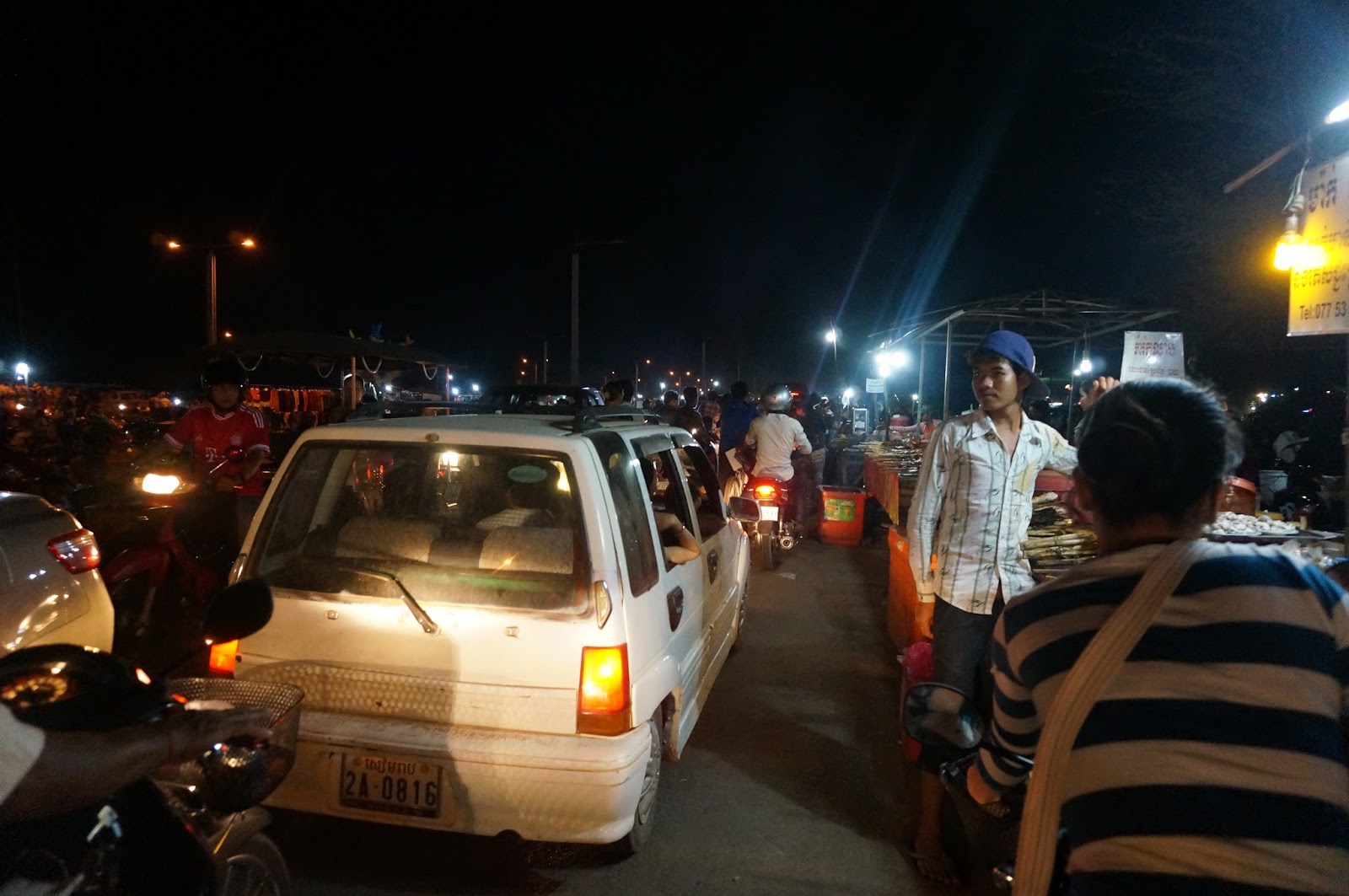
It's a well-known secret amongst locals that the local Cambodians don't hang out around Pub Street - they come to Road 60. 

This is a great hidden leisure spot for everyone - it has a carnival rides, food stands, 1500riel stores (like the $1 store), clothes and bag vendors, and even carnival games. It's especially packed on weekends with families coming from all over to enjoy their day off. It's also a good hang-out place after school or a date spot. So that's just what we did. We ate a bit, shopped a bit, walked around a bit, it's the best worlds of everything. 


Deep fried fish cakes and fried leek rice cakes


American style State Fair games

hoards of shoes

LA Lakers meet the NY Yankees. LOVE IT


Vietnamese style omlettes

Hmm.... I DEEPLY question the authenticity of these..


Funny side story: We borrowed a motorcycle from a colleague took a bit of detour around Angkor Wat before we arrived there. In sheer bad luck somehow the tires broke (or was broken when we borrowed it) and it made the ride really bumpy. It's actually quite dangerous as the entire motorcycle can break down. What to do in that situation? 

We just laughed the whole way through it until we got back home saying that it stimulated our muscles like one of those fat shaking machines you see on TV :) Needless to say we were safe so laughing was the best solution. I suppose we are turning Cambodian. 

Thursday, April 10, 2014

Khmer Lessons

Three times a week, I take Khmer lessons but it's strictly for colloquial conversations. While that has helped me immensely in my day-to-day interactions in Cambodia, I still have the ambition to read and write it as it's always a struggle trying to read store signs and local restaurant menus. 

Who better teacher to turn to than my own Wat Damnak monks? Once a week me and my colleague get reading and writing lessons from Venerable Rem in which he is very experienced and it's great. The problem is that the Khmer alphabet is pretty complicated so I'm a bad student for sure! 


Choul Chnam Kmae (Khmer New Years)

It's almost New Years in Cambodia, undoubtedly the most biggest holiday of the year alongside Pchumb Ben. I see star shaped ornaments sold and decorated everywhere. Also Pub Street seems like it's going to have some events going on as multiple stages are being set-up in several areas. There's an air of festivity everywhere - people seem to be much more cheerful and ready to bring on the New Year with joy. I'm so excited I'll be here just in time for it before I go back home!


Kaffe

I always joke with my animal loving coworkers that we should start a SPCA chapter in Cambodia. I've seen way too many stray cats and dogs that can use a loving home. Coming from a highly developed nation, pets are placed as high priority and almost human-like in people's lives. It's amazing how the luxury pet market has been surging the past decade. For Cambodia, pets are a different story. While there are many households that have animals, many are livestock (chicken, pigs, cows, water buffaloes, etc) or dogs that just hang around the house. No one has leashes on their dogs nor are they treated as the same level of pets as people would in the US. Their treated more as second class citizens that border on abuse. I'm sure PETA people will be horrified by some things I've seen. It's not that Cambodian people are animal abusers but that society in general have not placed pets or ethical animal treatment on high priority. Even in highly industrialized countries in Asia like South Korea and Japan for example, it's only recent that people have become much more conscious of how they treat their pets. I remember my dad said he used to chase after dogs with sticks in Japan when he was little. If he did that now, the police would be running after him.


In any case, I've seen a lot of abused dogs around town and they are generally very afraid of people coming close to them, especially foreigners. I remember stray dogs would come close to bark at me when I first came, although I think I must "smell" more local now since they've stopped doing that. Even dogs at the temple whom I've seen for 5 months still barely let me touch them. 

This dog who was still a puppy when she first came to the temple is an anomaly. She's gotten surprisingly fond of me especially since I started bringing her food and chased off bullying dogs a few times. I named her Kaffe, or coffee in Khmer, since she looks like an iced coffee; black like coffee on the top and white paws on the bottom like condensed milk.

 I seriously thought about adopting her and bringing her back to the US -  I've read many cases of oversea volunteers who have brought back abused stray pets back to their home countries - but with lack of veterinarians in the country the process is complicated. I would have to take her to Phnom Penh to get a series of shots and then apply to get her quarantined. For now, the monks seem to like her as well so I hope they do continue to take care of her after I'm gone. 


Wednesday, April 9, 2014

New Production Center

Sometimes the unlikely similarities between Japan and Cambodia surprises me in a good way.  In Japan, before any new business starts or opens on new property, a Shinto priest is brought into do a purification ceremony. There is a religious component of warding off evil spirits and bringing good luck in for the business to prosper; but there's also a component of community in which the neighborhood comes to welcome the newcomer and for employees to celebrate their new start of the business in unison. 

LHA is expanding in every direction and with the Sewing School we've opened a new production center about 1km away from Wat Damnak. Here the girls would come into work on mass orders from clients where as the Sewing School itself would be used to train the girls and do small customized orders. 

Of course, no Cambodian celebration can be absent from large stereos and set-up had been going underway since sunrise. The girls have also been preparing food for 60 people including 10 monks. Everyone was gathered into the hall which faced a row of monks chanting and spraying holy water with flowers. The business managers, Clive and Laura came up to offer incense and get purified and given good luck prayers from the monks. 


The production center have been a long aspiration of Clive and Laura's and it's a bit step towards self-sustaining the sewing business in LHA (the sewing school is sponsored by the Park Hyatt but not the sewing business itself). Hopefully with the production center up and running, we are able to get more global customer orders as well as provide paid jobs for gradating girls from the school. 

After the ceremony and food offering to the monks are finished, now it's our time to party. With music blasting away and food going around, we all definitely had a good time.